
No Heat? Furnace Checks to Run Before You Call
Seven checks that solve many no-heat mornings in Anderson without a call-out: thermostat, filter, breaker, gas valve, registers, and knowing when to stop and call.
- Anderson, IN
- November 5, 2026
Published November 5, 2026
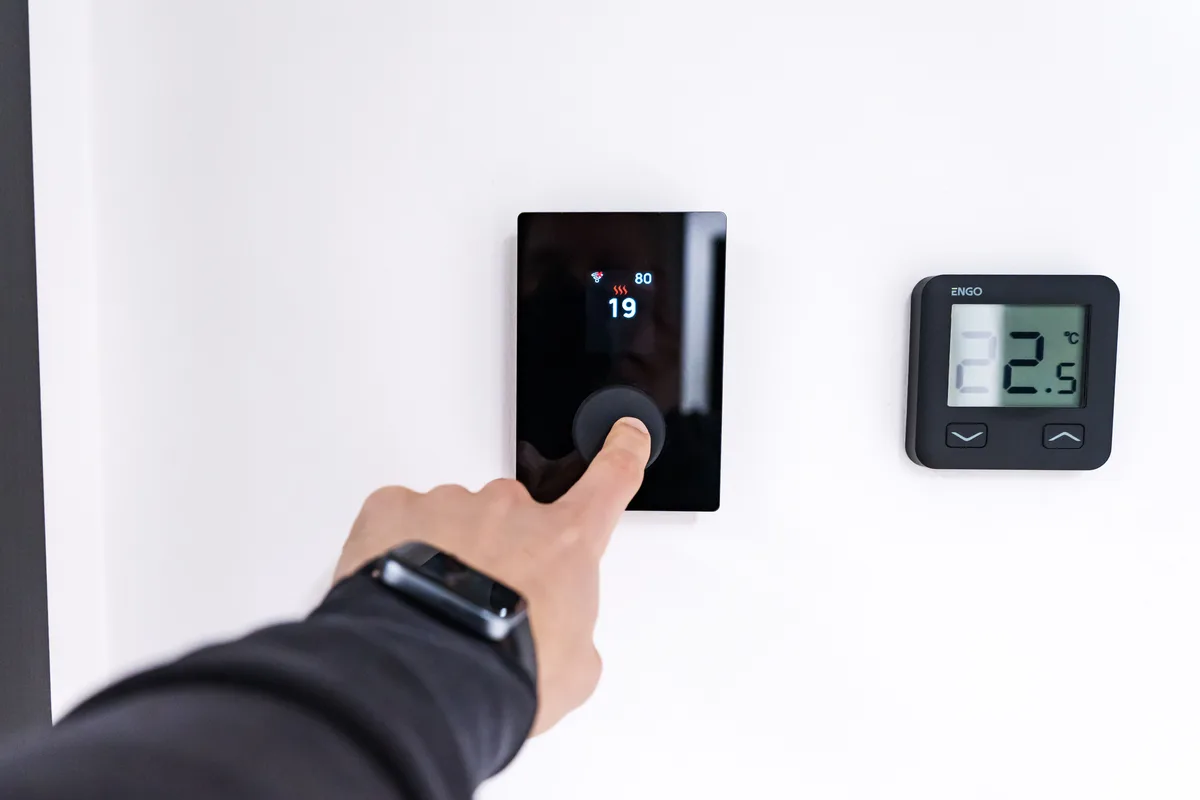
Start at the Thermostat
It sounds too simple to matter, and it solves more no-heat mornings than any other check. Is the thermostat set to Heat, and set above the room's current temperature? Are its batteries alive, if it uses them? Has someone switched it to Cool during a warm spell and forgotten? Give the furnace a full five minutes after changing a setting: many systems delay before firing, and a furnace judged dead at minute two is often running at minute four.
Check the Filter
A loaded filter is the most common cause of a furnace that starts, runs briefly and shuts down: starved of air, the furnace overheats and its limit switch turns it off to protect itself. Pull the filter and hold it to the light. If light does not pass, the furnace cannot breathe. A fresh filter of the right size can restore heat entirely, and if it does, note the date: that filter change just became a standing appointment with yourself.
Check the Breaker and the Furnace Switch
Furnaces have two power points: the breaker in the panel, and a switch near the furnace itself that looks like a light switch and gets turned off by accident more often than any professional will admit. Check both. A breaker that trips again as soon as the furnace runs is information, not an annoyance: something is drawing too much power, and that is a repair call, not a resetting routine.
Check the Gas Valve and the Pilot, on Older Furnaces
If other gas appliances are also out, the supply itself is the problem and the gas company is the call. If only the furnace is out, check that the gas valve at the furnace is on, handle in line with the pipe. Older furnaces with standing pilots can lose the pilot to a draught; relight it only if you know the procedure and the maker's instructions are at hand. A pilot that will not stay lit is a fault, not a technique problem.
Look at the Registers and the Returns
Walk the house. Supply registers closed or blocked by furniture in several rooms, or a return grille buried behind a sofa, can starve the system and chill the rooms furthest from the furnace while the furnace itself is blameless. Open what should be open. It will not fix a failed igniter, but it regularly fixes the complaint that one end of the house never warms, at a cost of one lap of the rooms.
Check the Condensate Drain, on High-Efficiency Furnaces
Condensing furnaces make water as they run, and that water leaves through a condensate drain and trap. If the drain blocks, a safety switch shuts the furnace down to stop the water backing into the unit, and the house goes cold with no obvious fault anywhere else. Look for the clear plastic drain line near the furnace base: standing water in it, or a trap that looks sludged, is a strong clue. Clearing it is sometimes as simple as the professional flushing the line at the diagnosis, but do not pour anything into the furnace itself. Note what you saw and say it on the call; it shortens the visit.
Know When to Stop Checking
Stop and call if you smell gas, if a carbon monoxide alarm has sounded, if the furnace makes a loud bang on ignition, if you see soot or scorch marks, or if the same fault returns within days of seeming to fix itself. Those are not check-list items; they are the boundary between a homeowner's checks and a professional's diagnosis, and crossing it with a gas appliance is how small faults become dangerous ones.
What the Professional Will Do Next
If the checks do not restore heat, the diagnosis starts where the checks end: fault codes on the control board, the ignition sequence tested step by step, the heat exchanger and burners examined, airflow measured, and carbon monoxide tested around the equipment. You will get the finding in plain terms and a written quote before any repair, and most common faults are fixed in that same visit.
Keep the List for Next Winter
The households that rarely make emergency calls are not luckier; they run these checks in autumn instead of January. Thermostat batteries changed, a spare filter in the house, the furnace switch identified before it is knocked, and a tune-up booked before the first cold snap: that is the whole secret, and it is written here so it can be somebody else's routine too. Print it, stick it inside the furnace cupboard door, and it will be there the one morning you need it.
About These Notes
These notes are published by Mounds Furnace Pros, an introduction service for furnace repair in Anderson, Indiana. They are general guidance, not a quote: your furnace's numbers come from a diagnosis visit and a written quote, which one call arranges. They are written from the calls Anderson homeowners actually make each heating season, and they are updated as the equipment, the codes and the questions change.
Questions About Your Own Furnace?
One call reaches a local heating professional directly. The visit starts with diagnosis, not a sales pitch.